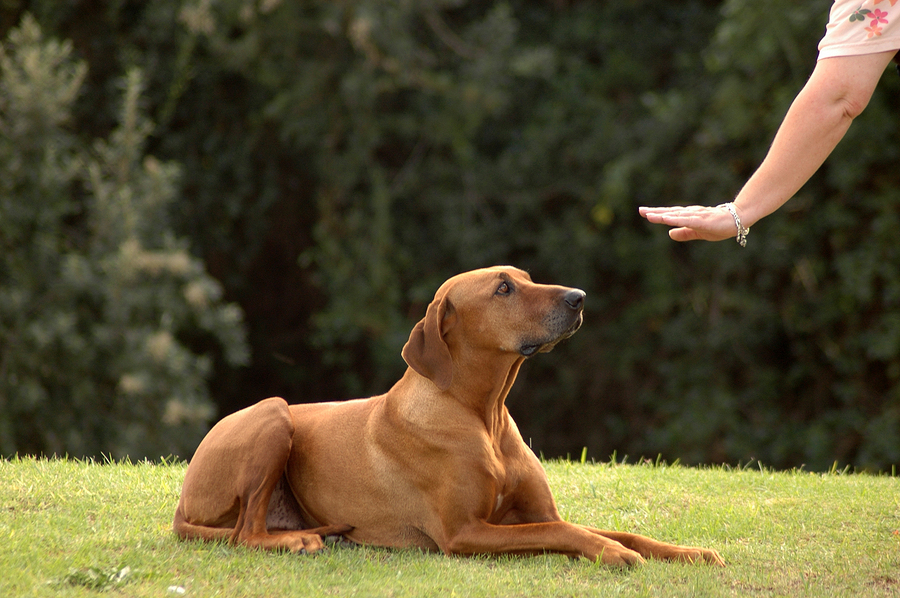



Sit
- Hold a treat or snack and say: Sit.
- If the dog doesn’t sit, guide them by moving the treat above their head.
- When the dog sits, give the treat and praise: Good boy/girl
Stay
- After the dog sits, say: Stay.
- Take a small step back while keeping eye contact.
- Start with short distances and gradually increase as the dog learns.
Come
- Call the dog’s name and say: Come.
- Hold a treat as an incentive.
- Reward the dog when they come to you.
- This helps with recall training.
Down
- After the dog sits, lower a treat to the floor.
- Say: Down.
- When the dog lies down, give the treat and praise.
Positive Reinforcement
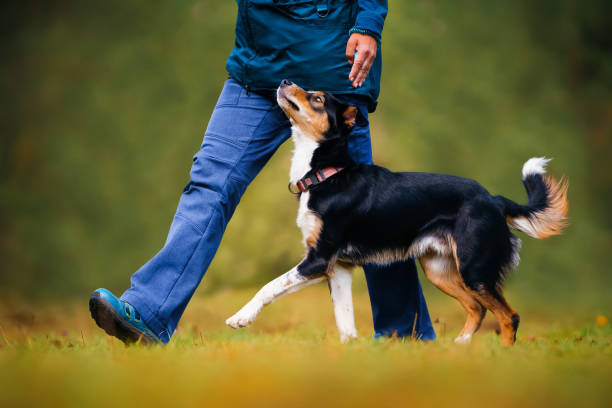
- Reinforce good behavior using treats, praise, and petting.
- Avoid negative punishment like hitting or shouting, as it can cause fear or aggression.
Consistency & Routine
- Use the same commands and tone every time.
- Short sessions of 10–15 minutes per day work best.
- Avoid overtraining to prevent boredom or stress.
Leash Training & Socialization
- Leash Training: Use short walks with treat rewards.
- Socialization: Gradually expose your dog to other dogs and people in a calm environment.
- Proper socialization helps your dog behave well outside the home.
Problem Behaviors
- Barking, chewing, jumping: Ignore unwanted behavior and reward correct behavior.
- Destructive behavior: Provide chew toys and ensure enough exercise.
| Day | Action / Skill | Method | Practice / Task | Feedback |
|---|---|---|---|---|
| Mon | Greeting & Introduction | Demo + Explanation | Practice greeting 5 people | Correct posture & tone |
| Tue | Active Listening | Demo + Roleplay | Listen to a 3-min story & repeat key points | Praise accurate recall |
| Wed | Time Management | Explain + Example | Plan 1-hour task schedule | Adjust for realistic goals |
| Thu | Problem Solving | Case study | Solve 1 simple problem | Review approach & give tips |
| Fri | Teamwork | Group activity | Work with 2 others on mini-task | Feedback on communication |
| Sat | Presentation Skills | Demo + Practice | Give 2-min mini-presentation | Correct body language & clarity |
| Sun | Review & Reflection | Discussion | Reflect on 6 days of practice | Note strengths & improvements |